

Low-Volume Support
Review order quantity, die cost, and profile feasibility before committing to a prototype or short production run.

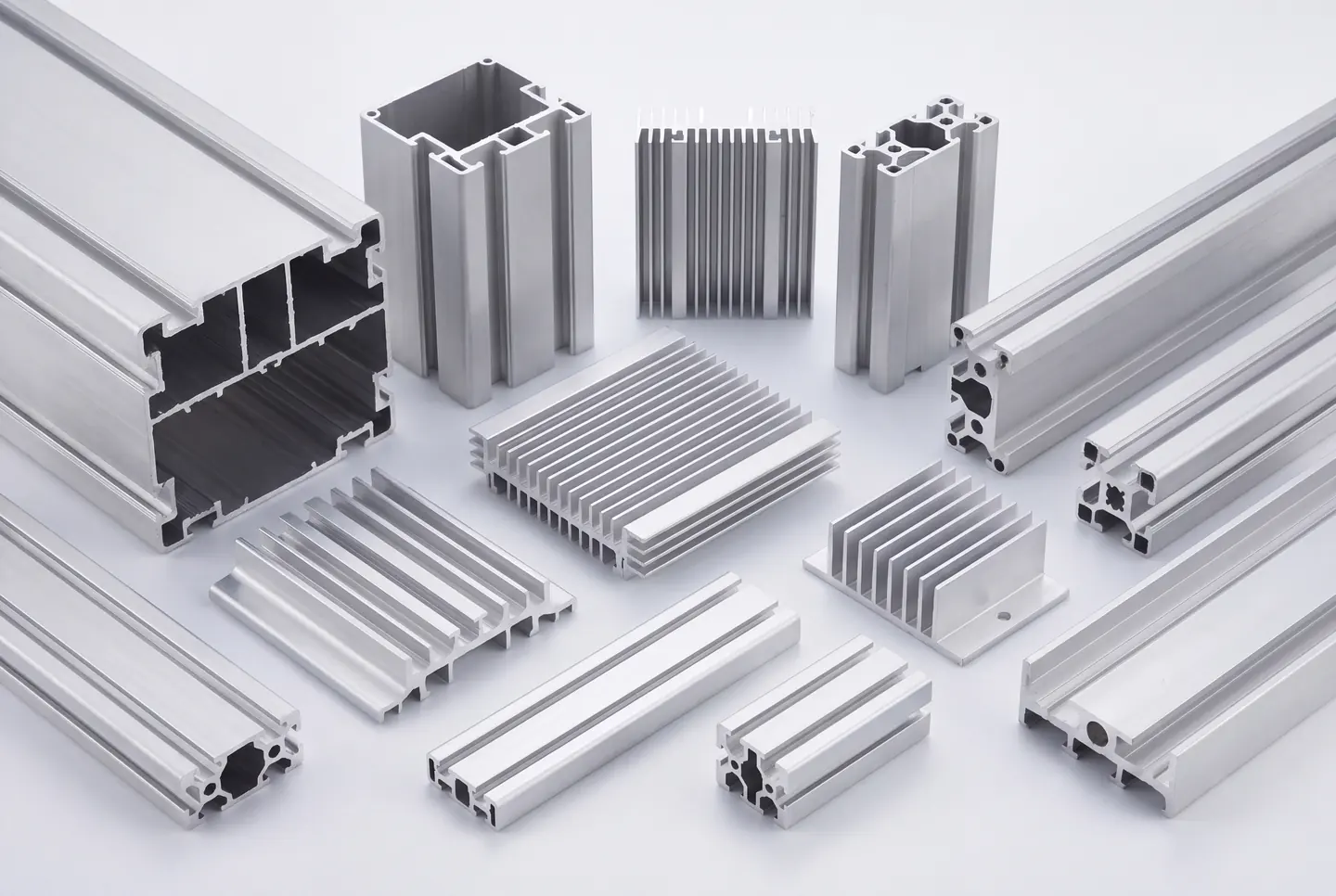


Prototype and Small-Batch Orders
A small order still needs a practical tooling budget and a profile that fits the assembly. Share the section drawing and required quantity so we can assess a custom die or an existing profile with machining.
Review order quantity, die cost, and profile feasibility before committing to a prototype or short production run.
Add holes, threads, slots, and controlled mounting faces after extrusion where the function requires them.
Separate profile tolerances from local machined tolerances and inspect both against defined datums.
One finished-part drawing and shared acceptance criteria keep the extrusion and secondary operations aligned.
Check the cross-section for wall balance, narrow openings, die support, and the surfaces that must hold a functional tolerance before the tool is made.
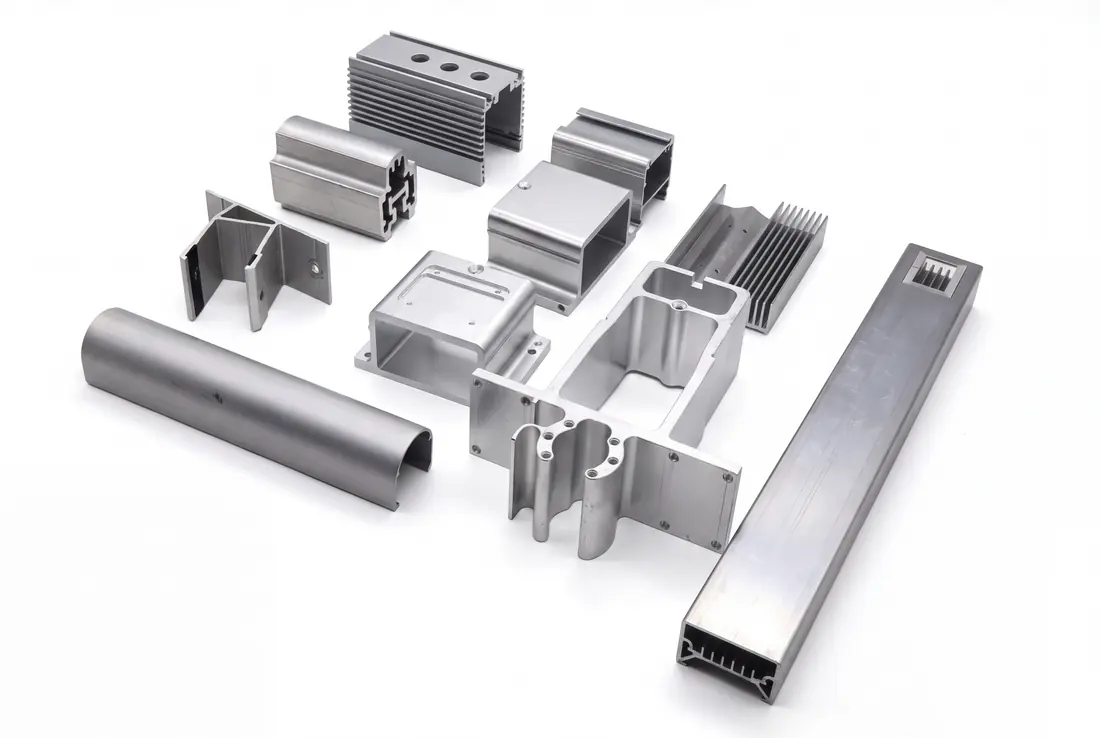
Plan cut length, machined mounting faces, holes, finish, and final inspection together so the extrusion arrives as a usable component.
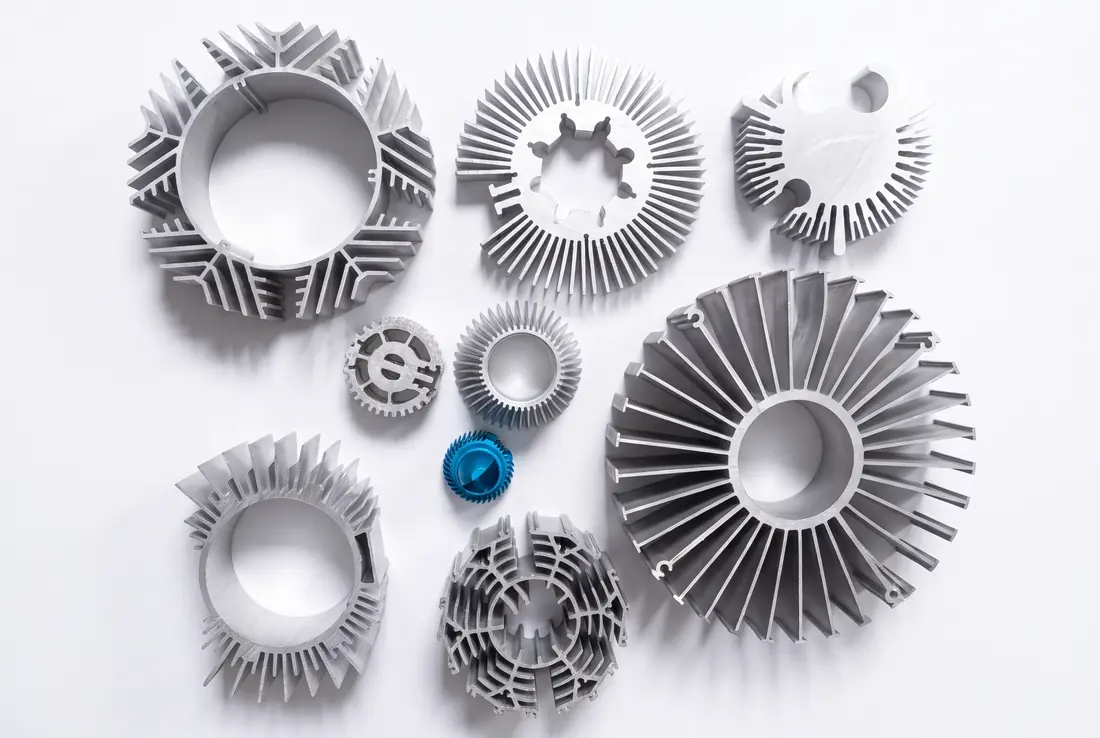
Share your drawing, target quantity, alloy, cut length, and secondary-process needs for review.

We assess die strategy, extrusion suitability, machining scope, finishing options, and expected lead time.

Approve the agreed profile details, inspection checkpoints, and downstream operations before release.
Qualified supply and post-processing are coordinated together so finished profiles can ship ready for the next stage.


Aluminum extrusion forces a prepared billet through a shaped die to create a continuous cross-section. It is well suited to rails, channels, enclosure frames, and heat sinks where the same geometry runs along the part length.
The section is only the starting geometry. Cut length, local holes, mounting faces, finish, and inspection determine whether the final component fits its assembly.
In a typical aluminum extrusion route, a prepared billet is heated and pressed through a die opening that defines the continuous cross-section.
The section, alloy, temper target, and die class guide billet preparation and temperature control. Hollow sections need internal support in the die.
A first trial checks metal flow, twist, surface condition, and section dimensions. Die corrections follow measured output rather than the nominal opening alone.

The emerging length is cooled, straightened as needed, and cut. Aging or other conditioning follows the specified alloy and temper route.
CNC machining then adds features that change along the length, such as holes, threads, and mounting faces. Finish and inspect the final interfaces before release.
A standard bar, tube, or channel can simplify sourcing when it already serves the design. A custom section is worth reviewing when integrated channels, ribs, or fins can reduce later fabrication or assembly work.
A standard bar or channel is often the simplest route when it already meets the assembly need. A custom section earns its tooling cost when it integrates fins, channels, or mounting features that would otherwise need extra parts or machining.
Before committing to a die, review wall balance, semi-hollow tongues, visible faces, alloy and temper intent, and the dimensions that matter to the finished assembly. Trial sections then show where flow or straightness needs correction.
Plan cutting, CNC holes or threads, finishing, and inspection from the finished-part drawing. These secondary operations create the features that cannot run continuously along the extruded section.


ZigiTech supports prototype aluminum extrusions and short-run custom profiles for teams developing new products or ordering small production batches.
We coordinate profile sourcing with CNC milling, drilling, tapping, finishing, and inspection, giving you one contact for the finished component as well as the extrusion.
Yes. We commonly support alloys such as 6061 and 6063, and we can also review other aluminum grades based on your part geometry, strength target, corrosion needs, and finishing plan.
Share your requirements during RFQ, and our team will confirm feasibility and process recommendations before quotation.
Not always. If an open standard profile already fits the function, using an existing die can reduce both tooling cost and launch time. When the cross-section is unique, a dedicated die is usually required.
During RFQ, ZigiTech reviews whether a standard profile is practical or whether a custom die is the better route for your geometry, quantity, and downstream machining plan.
Yes. We review prototype and low-volume aluminum extrusion orders. The minimum practical quantity depends on the alloy, profile size, die requirements, and secondary machining, so we confirm it for your project during quotation.
For a very small first build, we can assess whether a new extrusion die is justified or whether machining an existing profile is a more economical way to validate the design.
Lead time depends on whether the profile uses an existing die or needs new tooling, plus any machining, finishing, and inspection requirements after extrusion. New custom profiles usually take longer than repeat runs because die review, sampling, and process confirmation must happen first.
The fastest way to get a realistic schedule is to share the drawing, target quantity, alloy, finish, and required ship timing up front so we can quote the full workflow instead of only the raw extrusion step.
A complete RFQ usually includes the profile drawing, critical dimensions and tolerances, alloy or preferred material family, cut length, target quantities, and any secondary operations such as drilling, tapping, milling, bending, anodizing, or powder coating.
If you already have CAD data, sending both a dimensioned PDF and the editable file helps speed review. If you only have a sketch or reference sample, we can still review it and identify what is missing before quotation.
Extrusion tolerances should be reviewed feature by feature rather than applied uniformly across the whole profile. Critical fit dimensions, wall sections, straightness, and cosmetic areas may each need a different control strategy.
During quoting, ZigiTech helps separate what should be held in the extrusion itself from what is better controlled through CNC post-machining. This usually improves manufacturability, protects cost, and reduces avoidable back-and-forth after sampling.
Yes. We commonly coordinate cut-to-length processing, CNC milling, drilling, turning, threading, deburring, and other secondary operations after the profile is extruded. We can also review finishing and identification needs such as anodizing, powder coating, painting, silk-screen printing, and laser engraving.
Combining these steps in one workflow helps reduce handoff delays and gives your team one manufacturing contact for profile completion, inspection, and shipment release.
Custom extrusion is usually strongest when the part has one continuous cross-section along most of its length and only a limited number of secondary features need to be added later. That is often more efficient than removing large amounts of material from bar or plate.
If the geometry changes constantly along the full part length, or if most critical features still need heavy machining, another process may be more practical. We can review the part function and advise on the better manufacturing route before you commit.
ZigiTech manages qualified extrusion supply partners and controls the downstream process at our side, including CNC secondary operations, inspection checks, and shipment release criteria.
This approach gives customers one accountable manufacturing team while maintaining stable quality across different order sizes.
For a short-timeline prototype build, they suggested a simpler post-processing route that fit our budget and still gave us what we needed for functional testing.
Wir haben sie zuerst kontaktiert, weil sie beim Angebot schnell geantwortet haben, und die gelieferten Teile haben das bestätigt. Die Bestellung wirkte von Anfang bis Ende kontrolliert.
Their low-volume support helped us bridge the awkward period between approved prototypes and a larger production commitment. That flexibility reduced risk on our launch plan.
Vi fortsätter att beställa på nytt för att upplevelsen är förutsägbar på ett bra sätt. Kommunikation är tydlig, leveranser är pålitliga och det brukar bli mindre uppföljningsarbete för vårt team.
We sent over a bracket revision late on a Thursday and still had a clean quote before our Monday review. The team also pointed out one thread depth issue we had missed in the drawing.
Vores indkapslingsprojekt bevægede sig stadig mellem prototype og pilot, så vi havde brug for ærlig procesrådgivning frem for et salgstal. Zigitech forklarede, hvor vacuum casting gav mening, og hvor vi skulle blive ved bearbejdede dele.
Die Blechbearbeitungsteile kamen mit Beschriftungen, die tatsächlich zu unseren internen Montagesätzen passten. Das klingt klein, sparte aber Zeit in der Produktion und machte den Wareneingang deutlich einfacher.
We were under pressure on a fixture order and mostly cared about whether the promised date was real. The shipment left when they said it would, and the critical dimensions checked out on arrival.
Avant de lancer l'outillage, leur ingénieur est revenu vers nous avec des remarques sur l'épaisseur de paroi et un coin qui aurait été difficile à mouler proprement. Cela nous a probablement évité une itération coûteuse.
We ordered stainless parts for equipment used in washdown conditions. Finish quality was consistent, threads were clean, and the packaging kept everything separated properly in transit.
All information and uploads are secure and confidential.
Upload
Quote
Confirm
Ship
Supports:
