
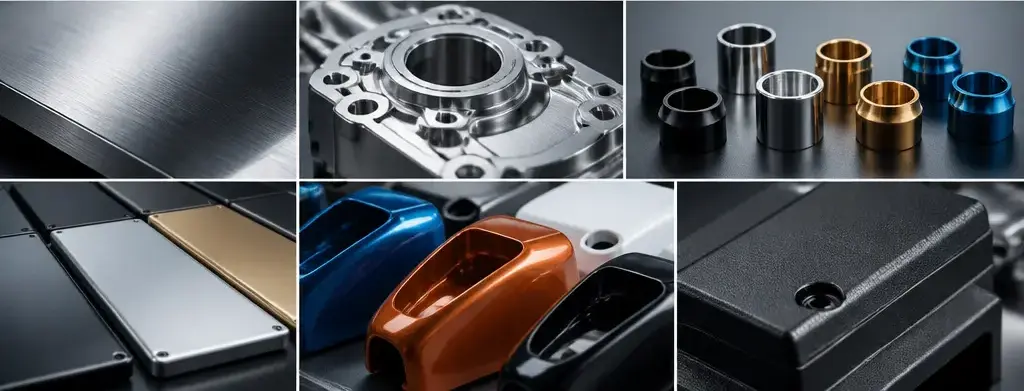
Mechanische Veredelung
Verwendet, wenn es um Glätten, Entgraten oder das Erstellen einer einheitlichen sichtbaren Textur geht.
- Im bearbeiteten Zustand
- Schleifen
- Sandstrahlen
- Glasperlenstrahlen
- Gleitschleifen
- Polieren
- Gebürstete Oberfläche
Verwendet, wenn es um Glätten, Entgraten oder das Erstellen einer einheitlichen sichtbaren Textur geht.
Gewählt für Korrosionsbeständigkeit, Verschleißlebensdauer, Leitfähigkeitsanforderungen oder stabile nachgelagerte Montageleistung.
Aufgebracht, wenn das Projekt Farbe, dekorative Konsistenz oder breitere Oberflächenabdeckung über eine Charge benötigt.
| Oberfläche | Hauptverwendung | Leistung | Anwendbar auf | Bearbeitungsspuren |
|---|---|---|---|---|
| As Machined | Baseline finish that leaves the part in its machined state. It is a practical choice when speed, cost control, and dimensional consistency matter more than cosmetic refinement. | CNC machining, Sheet metal fabrication | Metals, Plastics | Visible, light surface scratches |
| Sanding | Abrasive smoothing process that removes minor imperfections and prepares parts for a finer final finish. | CNC machining | Metals, Plastics | Reduced but visible |
| Sand Blasting | A blasting process that removes coatings and contaminants while creating a uniform, slightly abrasive surface texture. | CNC machining, Sheet metal fabrication | Metals, Plastics | Uniform roughness, slightly abrasive feel |
| Bead Blasting | Glass bead blasting produces a more even matte or satin appearance while softening the look of machining marks. | CNC machining, Sheet metal fabrication | Metals, Plastics | Matte or satin surface |
| Tumbling | A barrel or vibratory finishing process that smooths edges and improves surface consistency across batches. | CNC machining, Sheet metal fabrication | Metals, Plastics, Glass | Reduced and smoothed |
| Polishing | A finishing process that reduces roughness and creates a smoother, brighter, or mirror-like surface. | CNC machining, Sheet metal fabrication | Metals, Plastics | Glossy or mirror-like finish |
| Brushed Finish | Directional mechanical finishing that creates a consistent satin grain on metal surfaces. | CNC machining, Sheet metal fabrication | Metals | Reduced for non-cosmetic, removed on primary surfaces for cosmetic |
| Anodizing | Electrochemical treatment that thickens the oxide layer on aluminum and improves corrosion resistance. | CNC machining, Sheet metal fabrication | Aluminum, Titanium | Reduced for non-cosmetic, removed on primary surfaces for cosmetic |
| Hard Anodizing | Harder anodizing option for aluminum parts when wear resistance and surface durability matter more than cosmetic flexibility. | CNC machining, Sheet metal fabrication | Aluminum | Visible under anodizing |
| Chromate Conversion Coating | Chemical treatment for aluminum and magnesium alloys that improves corrosion resistance and paint adhesion. | CNC machining, Sheet metal fabrication | Aluminum, Magnesium alloys | Visible |
| Black Oxide | Chemical coating for ferrous metals that creates a thin black oxide layer and improves corrosion resistance. | CNC machining, Sheet metal fabrication | Steel, Iron | Visible |
| Electroless Nickel Plating | Autocatalytic metal coating that produces uniform coverage and improves corrosion resistance on complex geometry. | CNC machining, Injection molding, 3D printing | Metals, Plastics | Partially hidden |
| Nickel Plating | Nickel coating applied by electroplating to improve appearance, wear behavior, and corrosion resistance. | CNC machining, Sheet metal fabrication | Steel, Copper, Brass, Aluminum | Partially hidden |
| Electroplating | Electrically driven process that deposits a metallic coating onto conductive parts for protection or appearance. | CNC machining, Sheet metal fabrication | Metals | Partially hidden |
| Zinc Plating | Thin zinc coating used to improve corrosion resistance and appearance on steel and iron parts. | CNC machining, Sheet metal fabrication | Steel, Iron, Brass | Partially hidden |
| Powder Coating | Dry coating process that cures into a durable finish with color, texture, and strong wear resistance. | CNC machining, Sheet metal fabrication, Injection molding | Metals, Some Plastics | Removed |
| Painting | Liquid coating finish used for color, texture, and protective coverage across metal and plastic parts. | CNC machining, Sheet metal fabrication, Injection molding, 3D printing | Metals, Plastics, Wood | Partially visible |
| Electrophoresis | Coating process using charged particles in a bath to form a uniform finish on conductive parts. | CNC machining, Sheet metal fabrication | Metals, Ceramics | Hidden |
| Passivation | Chemical treatment that removes free iron and improves corrosion resistance on stainless steel and similar alloys. | CNC machining, Sheet metal fabrication | Stainless Steel, Other Corrosion-resistant Alloys | Visible |
| Teflon Coating | PTFE-based protective coating that lowers friction and improves release and corrosion resistance. | CNC machining, Sheet metal fabrication, Injection molding | Metals, Plastics | Visible |
| Heat Treatment | Thermal process used to change mechanical properties such as hardness, strength, and ductility. | CNC machining | Metals | Visible |
| SPI Finish | Standardized plastic surface texture system ranging from glossy to matte for injection molded parts. | Injection molding | Plastics | Visible |
| Tinted | Coloring option for plastic prototypes that adds a translucent or uniform color appearance without full painting. | 3D printing, Injection molding | ABS, PMMA, PC, PS | Visible |
| Chrome Plating | Decorative and functional metal coating used to improve appearance, hardness, and corrosion resistance. | CNC machining, Sheet metal fabrication | Metals | Partially hidden |
Für sichtbare Verbraucher- oder Markenteile beginnen wir mit der Prüfung der Oberflächenvorbereitung, Farbziele und wo Bearbeitungsspuren sichtbar bleiben können oder nicht.
Für industrielle und Outdoor-Hardware wird das Finish eher nach Korrosionsbeständigkeit, Reibung, Leitfähigkeit und Einsatzumgebung gewählt als nur nach Aussehen.
Einige Finishs bauen Oberflächendicke auf oder erfordern vorab Dimensionsplanung. Wir kennzeichnen diese Einschränkungen vor der Produktion, damit fertige Teile noch korrekt montiert werden.
Das hängt sowohl vom Material als auch von der Art der visuellen Qualität ab, die Sie benötigen. Für Aluminium ist Eloxieren eine häufige Wahl. Für sichtbare Stahlhardware können gebürstete, plattierte oder beschichtete Finishs besser sein. Für geformte Kunststoffe sind oft SPI-Textur und Lackieren wichtiger als ein separates nachgelagertes Finish. Die richtige Antwort ergibt sich aus der gemeinsamen Prüfung von Material, Geometrie und den kosmetischen Flächen des Teils.
Einige schon. Mechanische Veredelungen wie Strahlen haben meist nur begrenzte dimensionale Auswirkungen, während Beschichtungen und Plattierungen Schichtdicke aufbauen können. Deshalb prüft ZigiTech kritische Passungen, Gewinde, abgedeckte Zonen und Passflächen, bevor ein Finish in die Produktion übernommen wird.
Ja. Wir prüfen Finish-Kompatibilität über CNC-Bearbeitung, Blechverarbeitung, Kunststoffspritzguss und ausgewählte Prototypenprozesse. Einige Finishs sind über viele Prozessrouten praktikabel, während andere nur für eine enge Material- oder Teilefamilie Sinn machen.
Das ist häufig. Wenn Sie bereits das Teilmaterial, die erwartete Umgebung und ob das Teil kosmetisch oder funktional ist kennen, können wir das Finish-Set schnell eingrenzen und die sinnvollen Optionen anbieten. Das ist oft schneller als Trial-and-Error nach der First-Article-Phase.
Alle Informationen und Uploads sind sicher und vertraulich.
Hochladen
Angebot
Bestätigen
Versand
Unterstützt: